sábado, 3 de octubre de 2015

Ravioles / ravioli


Los raviolis (del italiano ravioli, plural del genovés raviolo, ‘plegado’), son básicamente cuadrados de pasta rellenos, variando estos según las diferentes regiones. Los platos de raviolis se acompañan de caldo o con salsas de tómate o con pesto. El modo más típico de preparación es con mantequilla de salvia, aunque existen variaciones modernas como: a piacere al gusto.

The ravioli (Italian ravioli, plural of Genoese ravioli, 'folded') are basically squares of pasta filled, varying according to the different regions. The ravioli dishes are accompanied by broth or with tomato sauces or with pesto. The most typical way of preparation is with sage butter, although there are modern variations such as: a piacere to taste.


INGREDIENTES: (para 4 personas)

Para la masa Masa:
100 gr de harina trigo tamizada
1 huevos enteros
1 cdita sal
1 cdita de aceite de oliva
1 cda de agua
C/n harina semolin (secar la pasta)

Para el Relleno

250 gr ricotta con sal
½ manojo de espinacas blanqueadas
1 amarilla de huevo
100 gr queso parmesano rallado


Para la Salsa

200 gr mantequilla
C/n hojas de salvia fresca
C/n queso parmesano rallado


PREPARACIÓN:

De la pasta:
Sobre la mesa de trabajo agregar la harina formando un volcán. Incorporar los huevos, sal, y el aceite. Con la ayuda de un tenedor ir incorporando todos los ingredientes hasta poder trabajar con las manos y formar una masa. Cubrir la masa con un paño de cocina y reposar por 1 hora.

Dividir la masa en 4 porciones iguales. Estirar un poco con el rodillo cada una de ellas. Reservar 3 láminas finas para los raviolis.

De relleno:
Mezclar todos los ingredientes del relleno hasta formar una mezcla homogénea.

Para armar los raviolis:
En una lámina de pasta, colocar porciones del relleno separados a lo largo de la lámina, pincelar con un poco de agua y cubrir con el resto de la lámina, doblarlo a mitad. Con la ayuda de la mano retirar el aire al doblar la lámina.
Cortar con el cortador de ravioli o con la rueda. Dejar secar en una bandeja con sémola. 


En una olla con agua hirviendo y sal cocinar los raviolis, por 10 minutos.
Colar y reservar.

De la salsa:
En un sartén derretir la mantequilla, al comenzar a dorar agrega las hojas de salvia y los raviolis. Servir con el queso parmesano.

Ravioli:

Ingredients for 4 people

For the mass Mass:
100 gr of sifted wheat flour
1 whole eggs
1 tsp salt
1 tsp olive oil
1 tbsp of water
C / n semolina flour (dry pasta)

For the filling

250 gr ricotta with salt
½ bunch of bleached spinach
1 yellow egg
100 gr shredded Parmesan cheese


For the salsa

200 gr butter
C / n fresh sage leaves
C / n grated Parmesan cheese

PREPARATION:

Of the pasta:
On the work table add the flour forming a volcano. Incorporate eggs, salt, and oil. With the help of a fork, incorporate all the ingredients until you can work with your hands and form a dough. Cover the dough with a dishcloth and stand for 1 hour.

Divide the dough into 4 equal portions. Stretch a little with the roller each one. Reserve 3 thin slices for ravioli.

Filling:
Mix all the ingredients of the filling until a homogeneous mixture is formed.

To build the ravioli:
In a sheet of paste, place portions of the filling separated along the sheet, brush with a little water and cover with the rest of the sheet, fold it in half. With the help of the hand remove the air when folding the blade.
Cut with the ravioli cutter or with the wheel. Let it dry on a tray with grits.

In a pot with boiling water and salt the ravioli for 10 minutes.
Paste and book.

Of the sauce:
In a frying pan melt the butter, when starting to brown add the sage leaves and the ravioli. Serve with parmesan cheese.


Imagenes referenciales.

Spaghetti all amatriciana


INGREDIENTES (6 porciones)

Spaguettis largos

Para la Salsa:
300 gr tomates maduros en concasse
150 gr tocineta ahumada en cubos
2 cda aceite de oliva
1 cebolla blanca en Brunoise
1 peperoncino finamente picado
C/n de sal
1 tz pecorino rallado para servir


PREPARACIÓN:

De la salsa:
 
En un sartén grande, agregar el aceite y sofreír la tocineta, incorporar la cebolla y cocinar hasta marchitar. Agregar el tomate y el peperoncino. Cocinar por 15 minutos, agregar la sal. 

En una olla con abundante agua hirviendo y sal cocinar la pasta por 10 minutos. Escurrir un poco y agregar la pasta en el sartén con la salsa y un poco de agua de cocción de la pasta. Servir espolvoreado con el queso.

Recipe:

INGREDIENTS (6 servings)

Spaguettis

For the salsa:
300 gr ripe tomatoes in concasse
150 g smoked bacon in cubes
2 tbsp olive oil
1 white onion at Brunoise
1 finely chopped peperoncino
C / n of salt
1 tz pecorino grated to serve


PREPARATION:

Of the sauce:

In a large skillet, add the oil and sauté the bacon, add the onion and cook until wither. Add the tomato and peperoncino. Cook for 15 minutes, add the salt.

In a pot with plenty of boiling water and salt the pasta for 10 minutes. Drain a little and add the pasta in the pan with the sauce and some water cooking the pasta. Serve sprinkled with cheese.

      Arroz al horno con conejo, caracoles y habas / Baked rice with rabbit snail and beans


      INGREDIENTES: Para 8 personas

      1 conejo
      ¼ tz. de aceite de oliva
      60 gr. de cebolla cortada en cubos pequeños
      40 g. de pimentón rojo sin semillas cortado en cubos pequeños
      2 cda. de ajo machacado
      2 cda. de pimiento dulce en polvo
      ½ cdta. de orégano seco
      1 tz. de arroz nishiki ( arroz para sushi )
      ½ tz. de vino blanco
      ½ tz. de puré de tomate
      1 cda. de papelón granulado
      1 lt. de jugo de carne, de pollo o de cerdo ( ver receta anexa )
      1 cda. de sal
      24 caracoles de tierra en conserva ( escargots )
      150 gr. de habas verdes frescas cocidas y repeladas
      4 cda. de perejil finamente cortado
      4 cda. de ciboullette finamente cortado


      PROCEDIMIENTO:

      Despresar el conejo y sellar en la paellera con un poco de aceite de oliva. Reservar

      Calentar el aceite en una paellera o caldero ancho y sofreír a fuego alto la cebolla hasta que esté marchita. Hacer lo mismo con el pimentón. Agregar el ajo, el pimiento dulce, el orégano y cocinar por tres minutos sin dejar de remover. Incorporar el arroz y sofreírlo moviendo constantemente por cinco minutos. Mojar con el vino y cocinar un par de minutos. Añadir el tomate, el azúcar y el conejo reservado y mezclar bien.

      Cubrir con el jugo de carne, agregar la sal y mezclar bien todos los ingredientes. Dejar hervir y bajar a fuego medio, cocinar moviendo con cuidado de vez en cuando para separar el arroz y evitar que se pegue en el fondo.

      Cuando el liquido este medio cm. por debajo del nivel arroz, agregar los caracoles, las habas y tapar con papel aluminio. Llevar al horno a 180 ºC para terminar la cocción.

      Por último agregar el perejil, el ciboullette y mezclar con cuidado. Aplanar el arroz y dejarlo reposar tapado unos minutos. Servir en la misma olla.

      Baked rice with rabbit snail and beans

      INGREDIENTS: For 8 people

      1 rabbit
      ¼ tz. Of olive oil
      60 gr. Onion cut into small cubes
      40 g. Of seedless red paprika cut into small cubes
      2 tbsp. Of crushed garlic
      2 tbsp. Of sweet pepper powder
      ½ tsp. Of dried oregano
      1 tz. Of rice nishiki (rice for sushi)
      ½ tz. Of white wine
      ½ tz. Of tomato puree
      1 tbsp. Of granulated paperboard
      1 lt. Of meat, chicken or pork juice (see attached recipe)
      1 tbsp. of salt
      24 canned ground snails (escargots)
      150 gr. Of fresh green beans cooked and repelled
      4 tbsp. Finely chopped parsley

      4 tbsp. Finely cut ciboullette

      PROCESS:

      Depress the rabbit and seal in the paella with a little olive oil. Reserve

      Heat the oil in a paella pan or large cauldron and saute the onion until it is withered. Do the same with the paprika. Add the garlic, the sweet pepper, the oregano and cook for three minutes without removing. Stir in the rice and stirring constantly for five minutes. Dip with wine and cook for a couple of minutes. Add the tomato, sugar and reserved rabbit and mix well.

      Cover with the meat juice, add the salt and mix well all the ingredients. Let it boil and lower over medium heat, cooking carefully moving occasionally to separate the rice and prevent it from sticking to the bottom.

      When the liquid is half cm. Below the rice level, add the snails, the beans and cover with foil. Bake at 180ºC to finish cooking.

      Finally add the parsley, the ciboullette and mix carefully. Flatten the rice and let it stand covered a few minutes. Serve in the same pot.

      Mero en salsa verde / White fish in green sauce


      INGREDIENTES: (para 4 personas)

      4 porciones de lomo de mero de aprox. 180 gr c/u
      1 taza de harina
      ½ litro de aceite de girasol
      1 cebolla mediana cortada en brunoise
      1 diente de ajo grande en pasta
      Un manojo de perejil cortado finamente
      250ml de agua;
      5 cucharadas soperas de aceite de oliva
      2 cucharadas de perejil picado finamente para decorar
      50 gr de guisantes blanqueados repelados
      6 esparragos blanqueados
      Sal y pimienta

      PREPARACIÓN:

      Salpimentar el pescado y rebozar con la harina y freír por las dos caras en el aceite de girasol. Reservar en una cazuela.

      En un sartén caliente rehogar la cebolla con el aceite de oliva. Cuando se ponga transparente, añadir la pasta de ajo, el perejil y el agua. Cocinar por 5 minutos a fuego medio. Licuar y tamizar. Verter en la cazuela junto con el pescado.

      Cocinar por 10 minutos moviendo con cuidado la salsa para evitar que se pegue y no deshacer el pescado

      Añadir los guisantes repelados y las puntas de espárragos 3 minutos antes de servir el pescado, justo para que tomen temperatura.

      Sírvalo en la misma cazuela donde se ha cocido el pescado.

      White fish in green sauce

      Ingredients for 4 people)

      4 servings of grouper loin of approx. 180 gr each
      1 cup of flour
      ½ liter sunflower oil
      1 medium onion cut in brunoise
      1 large garlic clove in pasta
      A bunch of finely chopped parsley
      250ml of water;
      5 tablespoons olive oil
      2 tablespoons finely chopped parsley for garnish
      50 g peeled whipped peas
      6 bleached asparagus

      Salt and pepper

      PREPARATION:

      Season the fish and batter with the flour and fry on both sides in the sunflower oil. Reserve in a casserole.

      In a hot pan sauté the onion with the olive oil. When transparent, add the garlic paste, parsley and water. Cook for 5 minutes over medium heat. Liquify and sift. Pour in the pan along with the fish.

      Cook for 10 minutes by carefully stirring the sauce to avoid sticking and undoing the fish

      Add the peeled peas and asparagus tips 3 minutes before serving the fish, just to take temperature.

      Serve in the same pan where the fish has been cooked.

      Pollo estilo roti / Roti chicken style


      INGREDIENTES:

      2 pechugas de pollo deshuesadas cortadas en cubos
      1 cebolla mediana en brunoise
      1 tallo de cebollín en brunoise
      1 pimenton verde en brunoise
      1 aji dulce en brunoise
      2 zanahorias peladas en rebanadas finas
      1 taza de caldo de pollo
      1 taza de agua
      2 papas grandes picadas en cubos de 1 cm
      2 cucharadas de salsa inglesa
      2 cucharadas de salsa soya
      1 cucharada de pasta de jengibre
      2 dientes de ajo triturados
      2 cucharadas de curry en polvo
      Chutney de mango
      Perejil fresco finamente picado
      Sal y pimienta al gusto
      Aceite para freír

      PREPARACIÓN:

      En un sarten grande con 2 cucharadas de aceite agregar la cebolla, el cebollin, el pimentón y el ají dulce. Obtener un sofrito. Agregar el pollo removiendo constantemente por 5 minutos mas. Incorporar las cebollas y rehogar por 5 minutos mas.

      Agregar el caldo de pollo y el agua y las papas, agregar la salsa inglesa, el curry, la salsa soya, el jengibre y el chutney. Rectificar sal.

      Tapar y dejar cocinar hasta que las papas estén listas. Rociar con perejil y servir.

      Este plato debe quedar una consistencia espesa. Servirlo de manera de guiso con arroz blanco.


      CHUTNEY DE MANGO

      INGREDIENTES:

      3 tazas de mango pintón en brunoise
      1 taza de vinagre de vino tinto
      1 cebolla mediana en brunoise
      1 taza de uvas pasas
      3 cucharadas de jengibre en brunoise
      2 dientes de ajo en brunise
      2 ají picantes picados brunoise
      1 taza de azúcar


      PREPARACIÓN:

      En una olla doble fondo hervir todos los ingredientes hasta que espese.


      Roti chicken style

      INGREDIENTS:

      2 boneless chicken breasts cut into cubes
      1 medium onion in brunoise
      1 stalk of chives in brunoise
      1 green pepper in brunoise
      1 sweet chi in brunoise
      2 carrots peeled in thin slices
      1 cup chicken broth
      1 cup water
      2 large potatoes chopped into 1 cm cubes
      2 tablespoons English sauce
      2 tablespoons soy sauce
      1 tablespoon of ginger paste
      2 cloves garlic, minced
      2 tablespoons curry powder
      Mango chutney
      Fresh finely chopped parsley
      Salt and pepper to taste

      Frying oil

      PREPARATION:

      In a large skillet with 2 tablespoons oil add onion, chives, paprika and sweet pepper. Get a sofrito. Add the chicken stirring constantly for 5 more minutes. Add the onions and sauté for 5 more minutes.

      Add the chicken broth and water and potatoes, add the English sauce, curry, soy sauce, ginger and chutney. Rectify salt.

      Cover and let cook until the potatoes are ready. Sprinkle with parsley and serve.


      This dish should be a thick consistency. Serve it stew with white rice.

      MANGO CHUTNEY

      INGREDIENTS:

      3 cups mango pint in brunoise
      1 cup red wine vinegar
      1 medium onion in brunoise
      1 cup raisins
      3 tablespoons ginger in brunoise
      2 garlic cloves in brunise
      2 chopped hot peppers brunoise
      1 cup of sugar

      PREPARATION:


      In a double bottom pot boil all the ingredients until thickened.

      Congri al estilo cubano / Congri cuban style


      Es una joya gastronómica esta insuperable mezcla de arroz con frijoles, saboreada por viajeros de todos los rincones del mundo y unas cuantas generaciones de cubanos, que sabiamente combina 2 proteínas de origen vegetal.

      Congrí es vocablo venido de Haití; donde a los frijoles colorados se les dice congó; y al arroz riz, como en francés. Congrí; es voz de creole haitiano que significa «congos con arroz». Congrí no equivale a «moros y cristianos», como en Cuba decimos al arroz con frijoles negros, que también parece ser plato de cocinero africano.

      Al congrí suelen echarle trocitos de carne de puerco y chicharrones

      It is a gastronomic gem this unsurpassable mixture of rice and beans, savored by travelers from all corners of the world and a few generations of Cubans, who wisely combines 2 proteins of vegetable origin.

      Congrí is a word from Haiti; Where red beans are said to have congo; And rice riz, as in French. Congrí; Is a Haitian Creole voice meaning "congos con arroz". Congrí does not mean "Moors and Christians", as in Cuba we say rice with black beans, which also seems to be dish of African cook.

      To the congrí they usually throw him pieces of pork and greaves


      INGREDIENTES:(para 6 personas)

      Para las caraotas

      500 gr caraotas rojas
      Agua suficiente para cubrir caraotas
      1 cebolla picada en cuatro
      1 pimenton picado en 2
      2 ahí dulce picados en 2
      1 hoja de laurel

      Para el congri

      Caraotas rojas cocidas con su caldo
      2 cucharadas de aceite vegetal
      2 chuletas de cerdo picado en cubos pequeños
      1 hoja de laurel
      1 cebolla brunise
      1 pimentón rojo picado en brunoise
      2 dientes de ajo en pasta
      Tocineta rebanada cortada en cubos pequeños
      Oregano
      Comino
      Sal
      Pimineta
      2 tazas de arroz blanco


      PREPARACIÓN:

      De las caraotas:

      Colocar en una olla de presión por 30 minutos las caraotas con el agua, la cebolla, el pimentón, el ají dulce y la hoja de laurel. Una vez listas retirar la cebolla, el pimentón el ají dulce y la hoja de laurel. Reservar el agua de las caraotas junto con las caraotas

      Del Congri:

      En una olla doble fondo caliente colocar 2 cucharadas de aceite agregar las chuletas, cebolla, pimentón y ajo. Agregar las caraotas con su caldo, el laurel, orégano, comino, sal y pimienta. Dejar cocinar hasta que hierva e inmediatamente agregar el arroz. Tapar la olla y cocinar a fuego bajo por 20 minutos.

      Sofreír en un sarten la tocineta hasta estar crujiente. Para servir colocar el congrí y rociar con el polvo de tocineta.


      Congri cuban style

      INGREDIENTS: (for 6 people)

      For the beans
      500 gr red beans
      Enough water to cover beans
      1 onion chopped in four
      1 minced paprika in 2
      2 sweet chopped in 2
      1 bay leaf

      For the congri
      Red beans cooked with their broth
      2 tablespoons vegetable oil
      2 chops of pork chopped into small cubes
      1 bay leaf
      1 onion brunise
      1 red paprika diced in brunoise
      2 cloves garlic in pasta
      Sliced bacon cut into small cubes
      Oregano
      Cumin
      Salt
      Pimpinette
      2 cups white rice


      PREPARATION:

      Of the beans:

      Place in a pressure cooker for 30 minutes the beans with water, onion, paprika, sweet pepper and bay leaf. Once ready remove the onion, sweet pepper paprika and bay leaf. Reserve the water of the beans with the beans

      Del Congri:

      In a double bottom hot pot put 2 tablespoons of oil add the chops, onion, paprika and garlic. Add the beans with your broth, bay leaf, oregano, cumin, salt and pepper. Let cook until boiling and immediately add the rice. Cover the pot and cook on low heat for 20 minutes.

      Sauté the bacon in a pan until crisp. To serve to place the congrí and to spray with the dust of bacon.


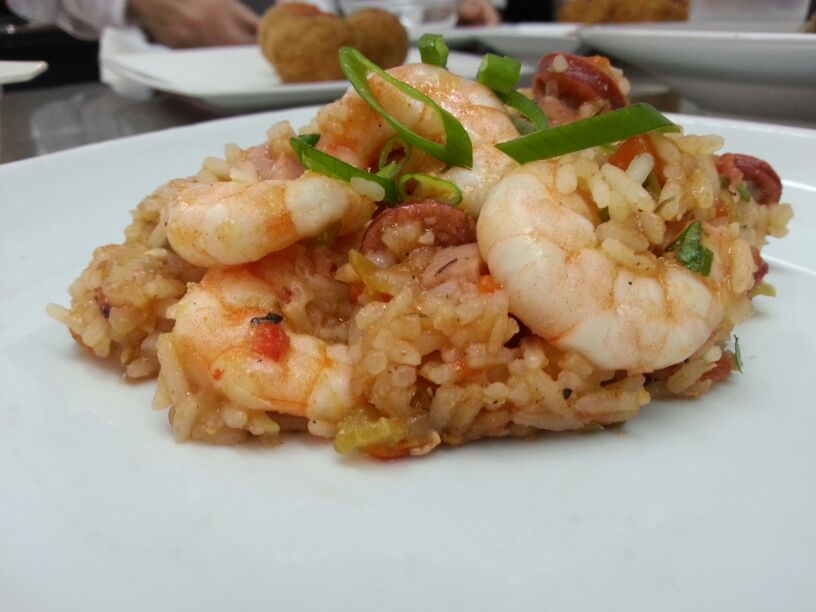
      Jambalaya


      Es una de las poquísimas preparaciones emblemáticas de la cocina del norte de américa. El nombre viene de jambon que es jamón en francés “al estilo” y “YA” es el nombre dado al arroz por los esclavos africanos. Nació en Louisiana, en el barrio francés de New Orleans y se dice que es la versión de la paella del nuevo mundo y a falta de azafrán, los criollos utilizaron tomate. 

      It is one of the very few emblematic preparations of North American cuisine. The name comes from jambon which is ham in French "in style" and "YA" is the name given to rice by African slaves. He was born in Louisiana, in the French Quarter of New Orleans and is said to be the version of the Paella of the New World, and in the absence of saffron, the criollos used tomatoes.


      INGREDIENTES: (Para 6 personas)

      2 cdas aceite vegetal
      4 pechugas de pollo sin piel y deshuesadas, cortadas en trozos
      450 g salchicha picante cocida, en lonjas
      170 g de jamón ahumado, en cubos de 1 cm por lado
      1 cebolla grande, cortada en cuadritos
      2 tallos de célery en brunoise
      1 pimentón rojo rostizado en cuadritos
      1 pimentón verde rostizado en cuadritos
      1 cdta pimienta cayena
      ½ cdta páprika
      1 cucharada ajo en pasta
      Pimienta negra al gusto
      ½ cdta orégano
      1 lata (250 g) tomates cortados
      5 tazas caldo de pollo
      2 ramitas de tomillo fresco, ó 1 cdta tomillo seco
      3 dientes de ajo machacados
      Sal al gusto
      2 hojas de laurel
      2 tazas arroz blanco
      ½ kg camarones pelados sin vena
      palitos de cebollín, cortados muy finos (tanto la parte blanca como la verde)
      ramas de perejil de hoja plana, cortados muy finos

      PREPARACIÓN:

      Calentar el aceite en un sartén grande, sofreír los trozos de pollo y las lonjas de salchichas, unos 5 minutos. Añadir los cubos de jamón y cocinar por otros 5 minutos.

      Agregar la cebolla, célery, pimentones, pimienta cayena, páprika, ajo, pimienta negra, y orégano. Cocinar hasta que los vegetales se ablanden, unos 5 minutos, revolviendo constantemente.

      Incluir la lata de tomate, ajo, el caldo de pollo, laurel y tomillo. Cocinar un par de minutos más. Sazonar

      Lavar y escurrir el arroz, y agregar al sartén. Cuando el caldo vuelva a hervir, reducir el fuego y tapar. Cocinar a fuego medio-bajo por 10 minutos.

      Remover la olla del fuego y dejar reposar sin quitarle la tapa por unos 20 minutos, para que el arroz se termine de cocinar.

      Sazonar los camarones limpios con sal, pimienta cayena y paprika y colocarlos sobre el arroz mientras reposa.


      Pescar las hojas de laurel. Espolvorear el perejil y las ruedas de cebollín antes de servir.


      INGREDIENTS: (For 6 people)

      2 tbsp vegetable oil
      4 skinless, boneless chicken breasts cut into pieces
      450 g hot sausage, cooked in strips
      170 g smoked ham, cubed 1 cm per side
      1 large onion, diced
      2 stems of celery in brunoise
      1 roasted red paprika
      1 green paprika roasted in small squares
      1 tsp cayenne pepper
      ½ tsp paprika
      1 tablespoon garlic in pasta
      Black pepper to taste
      ½ tsp oregano
      1 can (250 g) diced tomatoes
      5 cups chicken broth
      2 sprigs of fresh thyme, or 1 tsp dry thyme
      3 cloves garlic, crushed
      Salt to taste
      2 bay leaves
      2 cups white rice
      ½ kg peeled shrimp without a vein
      Chopped onions, finely chopped (both white and green)
      Branches of flat-leaf parsley, cut very thin


      PREPARATION:

      Heat the oil in a large skillet, sauté the chicken pieces and the sausage slices, about 5 minutes. Add the ham cubes and cook for another 5 minutes.

      Add onion, celery, paprika, cayenne pepper, paprika, garlic, black pepper, and oregano. Cook until vegetables are tender, about 5 minutes, stirring constantly.

      Include the can of tomato, garlic, chicken broth, bay leaf and thyme. Cook a couple more minutes. Season

      Wash and drain the rice, and add to the pan. When the broth comes to a boil, reduce the heat and cover. Cook over medium-low heat for 10 minutes.

      Remove the pot from the heat and let it rest without removing the lid for about 20 minutes, so that the rice is finished cooking.

      Season clean shrimps with salt, cayenne pepper and paprika and place them on the rice while it rests.

      Fish the bay leaves. Sprinkle parsley and onion rings before serving.

      Mofongo de cazón


      El Mofongo es un plato típico de PUERTO RICO hecho de plátano verde pelado y luego frito. Se coloca en un pilón y se muele con ajo y chicharrón de cerdo partido en trocitos hasta obtener una masa de consistencia media formada por trocitos de mínimas dimensiones sin llegar a la textura pastosa. Se sirve solo o mezclado con camarones así como muchas otras mezclas creativas de actualidad. Se disfruta de este manjar en restaurantes y lugares de comida típica criolla tanto en el país como en el exterior.

      The Mofongo is a typical dish of PUERTO RICO made of peeled green bananas and then fried. Place in a pestle and grind with garlic and pork crackling broken into pieces until obtaining a mass of medium consistency formed by pieces of minimal dimensions without reaching the pasty texture. It is served alone or mixed with shrimp as well as many other current creative mixes. Enjoy this delicacy in restaurants and places of typical Creole food both at home and abroad.

      INGREDIENTES: (para 6 porciones)

      Para el guiso:

      2lts de agua
      350 gr de cazón lavado
      60 ml de vinagre banco
      1 cucharadita de sal
      1 cucharada de onoto
      100 ml aceite vegetal
      1 cebolla cortada en brunise
      1 pimentón rojo cortado en brunoise
      1 tallo de cebollín cortado en brunoise
      2 ají dulce rojo cortado en brunoise
      3 dientes de ajo en pasta

      Para la masa de plátano verde:

      700 gr de plátano verde
      200 gr de chicharon
      1 diente de ajo en pasta
      30 gr mantequilla sin sal
      10 gr sal
      5 gr pimienta negra molida
      Aceite para freír

      Para formado del mofongo:


      70 gr harina de trigo
      Polvo de casabe
      1 huevo

      PREPARACIÓN:

      Del guiso:

      En una olla grande colocar el agua, el vinagre, la sal y el cazón. Dejar cocinar por aproximadamente 15 minutos una vez que hierva el agua. Retirar, quitarle la piel, desmenuzar y reservar.

      Calentar el aceite a fuego bajo junto con el onoto para obtener el aceite onotado. Colar y reservar.

      En un sartén caliente colocar el aceite onotado, el ajo, la cebolla, el cebollín y dejar cristalizar. Luego agregar el pimentón y el ají dulce y cocinar a fuego alto moviendo constantemente por 5 minutos aproximadamente, incorporar el cazón, agregar la sal, pimienta y cocinar por 10 minutos más. Retirar del fuego y reservar.

      De la masa de plátano verde:

      Pelar los plátanos y cortarlos en trozos de 2 cm aproximadamente. Freír en abundante aceite caliente hasta dorar por ambos lados.

      En un mortero majar el plátano frito con el chicharrón, los dientes de ajo y la mantequilla hasta obtener un puré, rectificar sazón con sal y pimienta


      Del formado del mofongo:

      Estirar una porción de 20 gr aproximadamente de masa de plátano sobre un trozo de papel film, colocar en el centro una porción de 20 gr d guiso de cazón y cerrar haciendo una bolita.

      Empanizar los mofongos pasándolos por harina, el huevo batido y luego el polvo de casabe.

      Freír en abundante aceite caliente hasta dorar. Servir calientes.


      INGREDIENTS: (for 6 servings)

      For the stew:

      2lts of water
      350 gr shrimp breeding washed
      60 ml of vinegar bench
      1 teaspoon salt
      1 tbsp onoto
      100 ml vegetable oil
      1 onion cut in brunise
      1 red paprika cut in brunoise
      1 stalk of chives cut in brunoise
      2 red sweet pepper cut in brunoise
      3 cloves garlic in pasta

      For the green banana dough:

      700 gr of green banana
      200 gr of chicharron
      1 clove garlic paste
      30 gr unsalted butter
      10 gr salt
      5 gr ground black pepper
      Frying oil

      For formed of the mofongo:

      70 gr wheat flour
      Casabe powder
      1 egg

      PREPARATION:

      From the stew:

      In a large pot place the water, vinegar, salt and fish. Let cook for about 15 minutes once the water boils. Remove, remove skin, shred and reserve.

      Heat the oil on low heat along with the onoto to obtain the oil onotado. Paste and book.

      In a hot skillet place the onotado oil, the garlic, the onion, the chives and let crystallize. Then add paprika and sweet pepper and cook over high heat, stirring constantly for about 5 minutes, add the fish, add the salt, pepper and cook for 10 minutes more. Remove from heat and set aside.

      From the green banana dough:

      Peel the bananas and cut into pieces of about 2 cm. Fry in plenty of hot oil until golden brown on both sides.

      In a mortar puff the banana fried with the chicharrón, garlic cloves and butter until obtaining a puree, rectify seasoning with salt and pepper


      Of the formed of the mofongo:

      Stretch a portion of about 20 g of banana dough on a piece of film paper, place in the center a serving of 20 gr of fish stew and close by making a ball.

      Grease the mofongs with flour, the beaten egg and then the cassava powder.

      Fry in plenty of hot oil until golden. Serve hot.